
Key Takeaways
Something changed in this industry over the last several years, and it changed for good reason. Women stopped being an afterthought in an industry built entirely around men, and the future of women's concealed carry is now being shaped in the open: by the data on who's actually buying, by training standards that keep getting harder rather than easier, by gear finally engineered around real bodies, and by laws that shift from state to state faster than most new carriers realize.
Each section below reflects a specific, observable shift, in the data, in training standards, in product design, and in the law, along with what a woman evaluating her own carry decision can act on this month.
1. The Data Finally Matches What Shows Up on the Sales Floor
For 2 decades, the firearms industry treated women as a niche inside a niche. That framing is dead. The National Shooting Sports Foundation has published retailer surveys for years showing women as one of the fastest-growing segments of new gun owners, and its own retailer data has repeatedly put women at roughly 1 in 5 to 1 in 3 of all new firearm purchasers depending on the year and survey wave. I'm not going to hand you a single tidy percentage and pretend it's gospel: retailer-reported estimates vary by survey method and by year, and the organization itself has noted the limits of point-of-sale data since not every retailer reports the buyer's sex accurately or at all. What doesn't vary is the direction. Every wave points the same way: more women, buying for the first time, buying to carry, not just to own.
That shift is why product design changed. It's why training changed. It's why this article exists. When a demographic goes from footnote to a real share of the market, every downstream decision, holster cut, class curriculum, retail floor plan, gets rebuilt around her instead of retrofitted for her.
2. Training Standards Are Getting Stricter, Not Softer
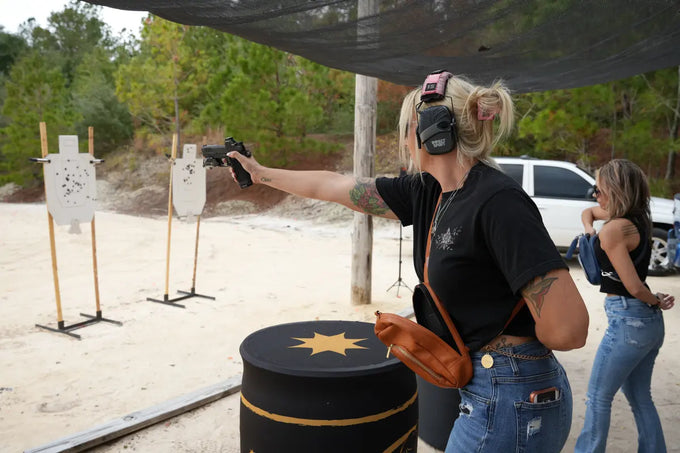
Here's a trend that doesn't get enough attention: the training available to women who carry is getting harder to pass, not easier to buy. Organizations like USCCA have built out structured, skill-verified curricula, not just a lecture and a paper target once and done. The instructors worth recommending run repeatable drills: draw from concealment, hits on a timer, malfunction clearing, all assessed against a standard, not just attendance.
If you are new to this, here's the non-negotiable part: any practice of your draw, your presentation, or your grip must be done with an unloaded, verified-clear firearm. Every time. That means you personally open the action, visually and physically check the chamber, and check it again after anyone hands the firearm to you, before a single repetition. This is not optional, and no trend in this industry changes that rule.
You can find a certified instructor near you through the NRA's instructor and course finder. Don't skip this step because you found a used holster and a magazine of ammunition. The holster is not the hard part. The judgment, the legal knowledge, and the trained reflexes are.
3. Carry Gear Is Finally Built From Her Body, Not Resized From His
For years, women's concealed carry gear meant a men's holster in a smaller size, or a purse with a zipper pocket that was never actually built around a trigger guard. That's changing because the mechanics finally got taken seriously. A holster has 1 job structurally: keep the trigger fully covered until the firearm is drawn, and hold retention consistent through movement, sitting, walking, bending. That's a mechanical requirement, not a style preference.
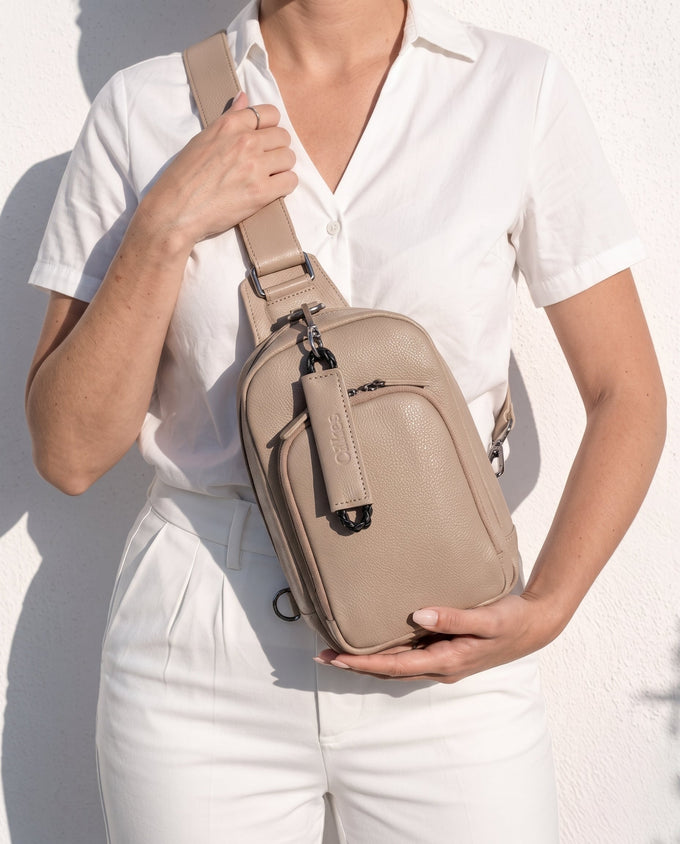
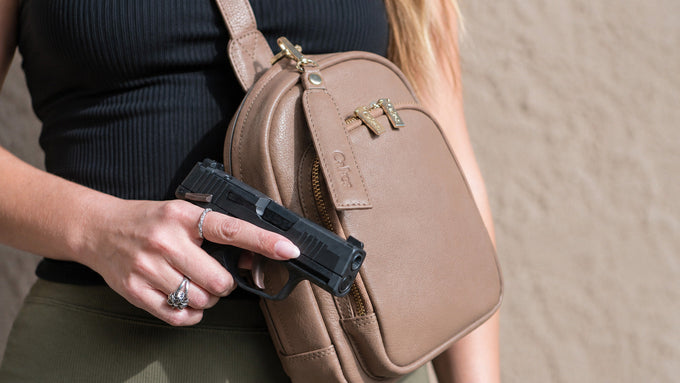
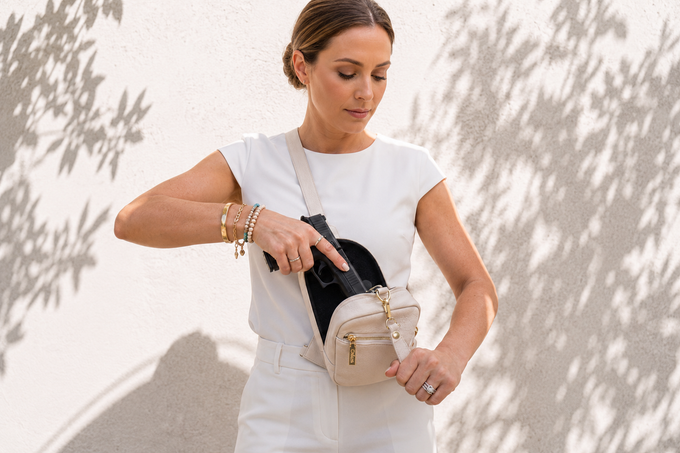
Cakes' concealed carry bags are built with a dedicated, rigid holster compartment sewn to the bag structure itself, not a soft pocket that collapses under the firearm's weight. That distinction is checkable: pick up any carry bag and see if the compartment holds its shape empty. If it collapses, the trigger guard coverage is not guaranteed once the bag moves, and that's the entire point of a dedicated compartment. Pair it with one of Cakes' holsters sized to the actual firearm model, not a firearm, and check the fit guide before buying so the retention and draw angle match how you actually carry, appendix, hip, or off-body in a bag built for it.
Off-body carry in a purpose-built bag isn't a compromise position anymore. It's a real method, provided the compartment is rigid, the zipper access is fast under stress, and you practice the draw specifically from that bag, not just from a belt holster in your bedroom.
4. Secure Storage Is Becoming Part of the Product Conversation, Not an Afterthought
Every household with a firearm needs a plan for when it's not on your body, and that plan is non-negotiable if there are children anywhere in that home, visiting grandkids included. Project ChildSafe distributes free cable gun locks nationwide through partnering law enforcement agencies, specifically because the barrier to secure storage is often cost and access, not willingness. The CDC tracks firearm injury data and is blunt about the numbers: unsecured firearms in the home are a documented risk factor for unintentional injury and death among children, which is exactly why secure storage isn't a suggestion. If you carry, you need a storage plan for the other 16 hours a day the firearm isn't holstered: a lockbox, a safe, or at minimum a cable lock, chosen before you need it, not after.
New carriers ask this constantly: what happens to the firearm at night, in the car, at a desk at work. The honest answer is that the storage plan is part of the carry decision, not a separate errand for later.
5. The Sale Isn't the Finish Line, and It Shouldn't Be for the Industry
A holster that fits and a bag that holds its shape are half the job. The other half is what the industry keeps underfunding: making sure the woman who bought it actually knows how to draw safely, clear a malfunction, and store the firearm responsibly when it's not on her. Selling 1 holster to a woman who took a class matters more than selling 10 to women who didn't, because a fitted product without training is just a fitted product.
Cakes Concealed Carry treats that as a rule, not a slogan. That's why this content points somewhere real: USCCA for structured training and self-defense legal education, the NRA's course finder for a certified instructor near you, and Project ChildSafe for a free lock if cost has been the thing stopping you from storing safely. None of those organizations pay for the mention. For Cakes Concealed Carry, the mission was never just moving product.
6. The Legal Landscape Is Getting Simpler in Some States and More Complicated in Others
Permitting has genuinely split into two tracks over the last several years. A growing number of states now allow permitless carry, sometimes called constitutional carry, for residents who meet the base legal requirements to own a firearm at all. That does not mean training became optional. It means the state stopped requiring a class before you can carry, which is a different thing entirely from training being unnecessary. At the same time, other states have added requirements: live-fire qualification renewed on a schedule, expanded lists of sensitive locations where carry is prohibited, and stricter reciprocity rules for permits issued elsewhere.
Here's the part that trips up new carriers the most: your home state's rules do not travel with you automatically. A permit valid in your state may not be honored the moment you cross into another one, and sensitive-location restrictions, courthouses, schools, some private businesses that post signage, vary by state and sometimes by county. Before a road trip, check the current reciprocity status for every state on your route directly with that state's attorney general site, not a forwarded screenshot from a group chat. Laws here change often enough that a map that was accurate 2 years ago can be wrong today.
This is also where insurance and legal-defense coverage stopped being a niche add-on. Groups like USCCA built entire membership tiers around post-incident legal defense specifically because a legally justified use of force can still mean a court process that costs real money to navigate. Federal firearms law itself is set by the ATF, and state reciprocity rules sit on top of that federal floor, which is why the same permit can behave differently depending on where you cross a state line. If you carry regularly, treat legal-defense coverage the same way you'd treat any other insurance decision: read what it actually covers, what it excludes, and what the claims process looks like, before you need it.
7. Women Are Becoming the Instructors, Not Just the Students
Maybe the most important shift in this entire industry is the one that gets the least press: women are increasingly the ones teaching the class, not just filling the back row of it. A woman instructor changes the room in ways that matter mechanically, not just emotionally. She can speak directly to how a strong-side hip holster prints differently under a woman's typical clothing silhouette, how grip strength and hand size interact with a slide's spring weight, and how a shoulder holster rides differently across a woman's frame than a man's. Those are equipment and biomechanics questions, and an instructor who has personally solved them teaches a more useful class.
This shows up directly in customer questions: more women asking for an instructor recommended by name, not just a training organization. If you're looking for one, start with the NRA's course finder and filter by instructor, then call ahead and ask directly whether the class includes a live-fire qualification, a timed draw assessment, and a written legal component. A good class will have all 3. A class that's only a lecture and a static paper target once is not equipping you to actually carry, it's equipping you to have bought a permit.
This shift also means the local range culture is changing. Women-only class nights, mentorship pairings between experienced carriers and new ones, and online communities built specifically around carry logistics rather than gun culture broadly, all of that is newer than it looks and growing faster than the industry press covers it.
8. Everyday Clothing Is Being Engineered Around Concealment, Not the Other Way Around
For most of this industry's history, concealment meant picking clothes that could hide a men's holster: looser waistbands, an extra layer, a jacket in summer. That's backward, and it's finally being treated as backward. Concealment-focused apparel now starts from the holster and the draw stroke and builds the garment around that mechanical requirement, reinforced waistband channels that won't sag under a loaded holster's weight, fabric placement that doesn't print at the hip or small of back, and cuts that allow a full, unobstructed draw stroke without an extra step to clear a hem or a strap first.
This matters for off-body carry too. A concealed carry bag only works as a system if the rest of what you're wearing doesn't fight it: a strap length that keeps the bag in a consistent position relative to your draw hand, a body position you've actually practiced from a seated position in a car and a standing position in a store aisle, both, not just one. The garment and the bag are 1 system, not 2 separate purchases, and testing them together with an unloaded, verified-clear firearm before you ever carry in public is the only way to know the system actually works for your body.
9. The Buying Experience Itself Is Changing
Buying a first holster or carry bag used to mean walking into a shop built for a customer base that wasn't you, standing in an aisle designed around a different body and a different comfort level with the product entirely. That's shifting because the purchase itself is being rebuilt around her: measurement guides that ask about actual carry position and clothing habits instead of generic sizing, return policies that account for the fact that fit can't always be judged from a photo, and customer service reps who can answer a direct mechanical question about retention and draw angle instead of reciting a product description.
Cakes' own fit guide exists for exactly this reason: too many women were buying based on a bag's appearance and discovering the holster compartment didn't match their firearm's dimensions only after it arrived. A good buying experience now asks the mechanical questions up front, firearm make and model, dominant hand, typical carry position, before it ever shows a product photo.
10. Three Trends to Watch Over the Next Year
If you want the short version of trends to watch concealed carry, here are 3 tracked directly from order and return data, not a trend report written by someone who's never sold a holster:
- Fit-first buying. Women are returning gear less often when it's sized to the specific firearm and body type rather than a generic small/medium/large. Expect more brands to publish real fit guides instead of size charts borrowed from menswear.
- Training bundled with the purchase. More retailers are pairing a holster or bag purchase with a discount code for a local class or a link straight to an instructor finder, instead of leaving the buyer to figure out training on her own.
- Off-body carry taken seriously. Purpose-built carry handbags with rigid holster compartments are being tested and reviewed by instructors, not dismissed by default, because the mechanics can now be verified rather than assumed.
11. What This Means for the Next Era of Women's Carry
Next era women's carry looks like this: better data on who's actually buying, harder training standards instead of easier ones, gear engineered around real bodies and real movement, storage built into the buying decision instead of ignored, and a slower, more honest sales pitch that includes the word no sometimes, no, that bag isn't right for your draw, no, don't skip the class, no, don't dry-fire without checking the chamber first.
The upcoming CCW trends worth watching aren't flashy. They're structural: fit, training, storage, honesty. That's a better future than a louder one.
None of this replaces a class with USCCA or a certified instructor found through the NRA's course finder, and it doesn't replace a free lock from Project ChildSafe sitting in a house where a child could ever find that firearm unattended. Fit and mechanics are what Cakes Concealed Carry knows best, and the fit guide, the bags, and the holsters keep getting built around real bodies instead of borrowed sizing. But a holster was never the whole decision. The training and the storage plan are the parts that actually keep you and the people around you safe, and that hasn't changed no matter how much the gear has.