
Key Takeaways
Cakes Concealed Carry ranks what keeps you safe in a specific order, and that order comes before another word about equipment. Safe handling habits come first. A real practice routine comes second. Knowing your state's carry law comes third. Gear comes fourth. That order is not a style choice. It is the order that keeps you and everyone around you safe, and Cakes will not soften it to make the equipment section feel more important than it is.
Concealed carry has exploded in popularity over the past several years, and Cakes has watched hundreds of new carriers walk through that same moment at the counter. A woman walks in, finds a firearm that feels right in her hand, picks a holster that disappears under her clothes, and walks out feeling ready. That feeling is real, and it matters. But feeling ready to own a firearm and being ready to carry it well are two different things, and the gap between them is closed by concealed carry training, never by the gear itself.
Nobody has this conversation with you at the gun counter when you are buying your first setup. Cakes is having it here, in this order, because the order is the point.
What "Training the Draw" Really Means
"Training the draw" does not mean tactical drills built for a movie scene. It means building the safe, repeatable habits that let you load, carry, draw from concealment, and re-holster an unloaded, verified-clear firearm without hesitation, confusion, or unsafe movement. Every rep in this kind of training happens with an unloaded, verified-clear firearm, checked by you, every single time, no exceptions.
This is muscle memory built through calm, deliberate repetition, not adrenaline. Cakes compares it to parallel parking. Your first ten attempts are clumsy. You check your mirrors 3 times and still end up a foot from the curb. By your fiftieth attempt, you do not think about it. You just do it, safely, automatically. That is the goal here too. Not speed. Not aggression. Quiet, reliable competence.
The best training sessions are almost boring: slow, repetitive, unremarkable. That is exactly what makes them work.
1. Safe Handling Habits: The Non-Negotiable Foundation
This is rank 1 because nothing else on this list matters if you get this part wrong. Everything below it is optional by comparison. This is not.
The 4 rules, and Cakes wants you to know them by number, not just by feel:
- Treat every firearm as loaded.
- Never point it at anything you are not willing to destroy.
- Keep your finger off the trigger until you have made a deliberate decision to fire.
- Know your target and what is beyond it.
You learned these on day one of your first safety course, and they probably felt too obvious to repeat. Of course you would not point a firearm carelessly. Of course you would keep your finger off the trigger. It sounds like being told to look both ways before crossing the street.
Here is why instructors repeat them anyway: familiarity breeds carelessness, and carelessness is where accidents live. Carriers who have done this for a decade or more still say these rules to themselves, out loud or in their head, every time they pick up a firearm. Not because they forgot them. Because they refuse to let them become background noise.
Build this habit now: every time you load, unload, or holster your firearm, narrate the safety check out loud. Finger off the trigger. Muzzle direction clear. Know what is behind your target. Confirm the firearm is unloaded and verified-clear before any dry-fire or handling drill. It will feel redundant at first, like reading instructions you already know by heart. Over time it becomes automatic, and skipping it will feel wrong, the way leaving the house without locking the door feels wrong. The habit has to outlast the motivation, because motivation runs out and habits do not.
Secure storage is not optional. If you have a home, you need a way to store your firearm that keeps it out of reach of children and anyone else not authorized to access it, whether that is a quality gun safe, a lock box, or a cable lock used correctly. If there are children in your home, this is not a preference. It is the baseline. Project ChildSafe provides free firearm safety kits and storage guidance, and it is worth your time even if you think you already have storage handled.
2. A Real Practice Routine: Regular, Low-Pressure, Documented
Rank 2. This is where consistency beats intensity, every time, and the math backs it up.
A carrier who practices 10 minutes a week builds more durable skills than one who does a single 4-hour range day once a year and nothing in between. Skills built slowly stay. Skills crammed in all at once fade the same way they arrived, quickly.
Here is what a working routine looks like, broken down by frequency:
Weekly: A few minutes of dry-fire practice at home with an unloaded, verified-clear firearm, in a room cleared of all live ammunition, with the ammunition stored in a separate part of the house. Confirm the chamber is empty and the magazine is removed before you begin, every time, and do this in a safe direction where an accidental discharge could not cause harm.
Monthly: A range session, even a short one, so your hands stay familiar with live fire and recoil. This is also the time to run a timed draw from your real concealment setup, the clothes you wear every day, the position you carry in. Track your numbers. A clean draw to first shot from concealment, for an experienced carrier practicing regularly, typically lands in the 1.5 to 2.5 second range on a live range under controlled conditions. That number is not a passing grade and it is not a competition score. It is a baseline you record for yourself, so you can see whether you are improving or backsliding over months.
Use it alongside the Tueller Drill, not instead of it. Salt Lake City police trainer Dennis Tueller published the concept in 1983 after timing how fast an attacker with an edged weapon could cover 21 feet, roughly 1.5 seconds for an average adult male at a run. That number became shorthand for a minimum reactionary gap, and it is worth knowing, but it comes with 2 honest limits. First, Tueller measured one attacker on flat, open ground with no obstacles, not the hallway, parking lot, or crowded aisle where you carry. Second, the drill measures distance covered, not your draw speed, your decision time, or whether drawing is even the right call in that moment. Treat the 21 feet number as a historical reference point for how little time a close threat can leave you, not a script for what to do when the distance closes.
A season of skipped range trips shows up immediately the next time you go, the same way rust shows up on any skill you stop using. Schedule practice the way you schedule anything else you are committed to maintaining: a recurring reminder, a standing appointment with yourself, not something you wait to feel motivated to do.
3. Legal Knowledge: The Blind Spot Most Carriers Ignore
Rank 3, and this is the one new carriers skip most often because it feels like homework instead of training. It is training. The paperwork side of carrying is just as much your responsibility as anything you do at the range.
Concealed carry laws vary by state, and sometimes by county. Reciprocity agreements change. What counts as a "sensitive place" or "gun-free zone" shifts from one jurisdiction to the next. Knowing the rules everywhere you carry, not just at home, is on you.
If you travel out of state, your home-state carry permit does not automatically travel with you the way a driver’s license does. Before any trip across state lines, check the current reciprocity agreement between your home state and your destination state, along with that state’s restricted or prohibited locations. Do this every time you travel,not just once,because reciprocity agreements and firearm laws can change.
A helpful resource for concealed carriers is the free USCCA Concealed Carry Reciprocity App, which provides state-specific information in one convenient place. Travelers can use it to review reciprocity, self-defense and home-defense laws, gun-free and restricted locations, ammunition restrictions, carry requirements, and other state-specific rules that may affect how and where a firearm can legally be carried. It can be a useful part of your pre-travel routine, but laws should always be verified with current official state sources before traveling with a firearm.
Set a specific date once a year, tied to something you already do on a schedule, like renewing a subscription or reviewing your budget, and use it to recheck your state's current concealed carry statutes and any reciprocity updates for states you plan to visit. Laws change more often than most carriers expect, and staying informed is your responsibility, not something your original instructor owes you a decade later.
For firearm safety fundamentals, the NRA's gun safety resources are a solid starting point. For a broader view of carry trends and research, the Crime Prevention Research Center publishes regularly updated data. Read both with their limitations in mind: they represent specific research approaches and data sets, not universal consensus, and you should treat them as one input alongside your own state's official statutes, not a replacement for reading those statutes yourself.
4. Gear: Last on This List for a Reason
Rank 4. Gear matters. It just does not outrank anything above it, and here is what "good gear" means, in specific terms, instead of leaving it vague.
A holster earns a place on your body by passing specific tests, not by looking good in a photo. Run what Cakes calls the Tug Test and the Silhouette Test.
Make sure your holster passes the “tug test.” With the unloaded firearm properly seated in your holster, give the firearm a firm tug to check its retention. The firearm should remain securely in place and should not slip past the holster’s retention features during normal movement or handling. If it comes out too easily or defeats the retention without an intentional draw, the holster may not provide an appropriate fit for that firearm. Your carry setup should keep the firearm secure while still allowing a deliberate, consistent draw when needed.
A Silhouette Test is to put the holster and firearm on under the exact outfit you plan to wear, then look in a mirror from multiple angles, including bending and reaching overhead, to check for printing or shifting. A holster that passes the test on a given outfit is cleared for that outfit. A holster that fails either test is not, regardless of price or brand reputation.
Split the features of the holster into two piles, because they are not equal weight, and Cakes will not pretend they are. Non-negotiable, pass or fail: full trigger guard coverage so nothing can contact the trigger while holstered, a fit molded to your specific firearm make and model, a retention screw you can adjust for the exact break-free tension you want, and retention that survives the tug test. A holster that fails any one of those 4 does not go on your body, no matter how it looks. Nice-to-have, worth paying for but not worth a safety compromise: adjustable cant, a claw attachment for better concealment, or a color that is not black.
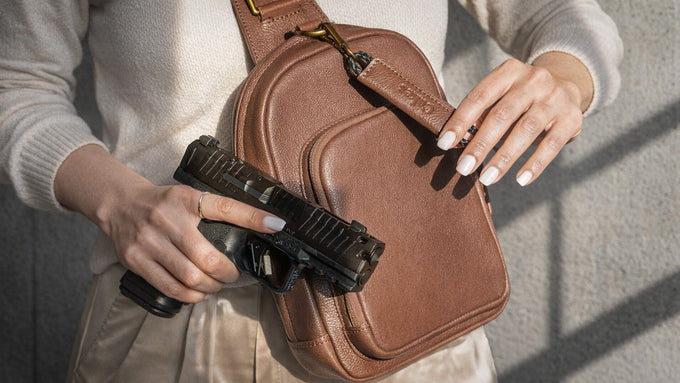
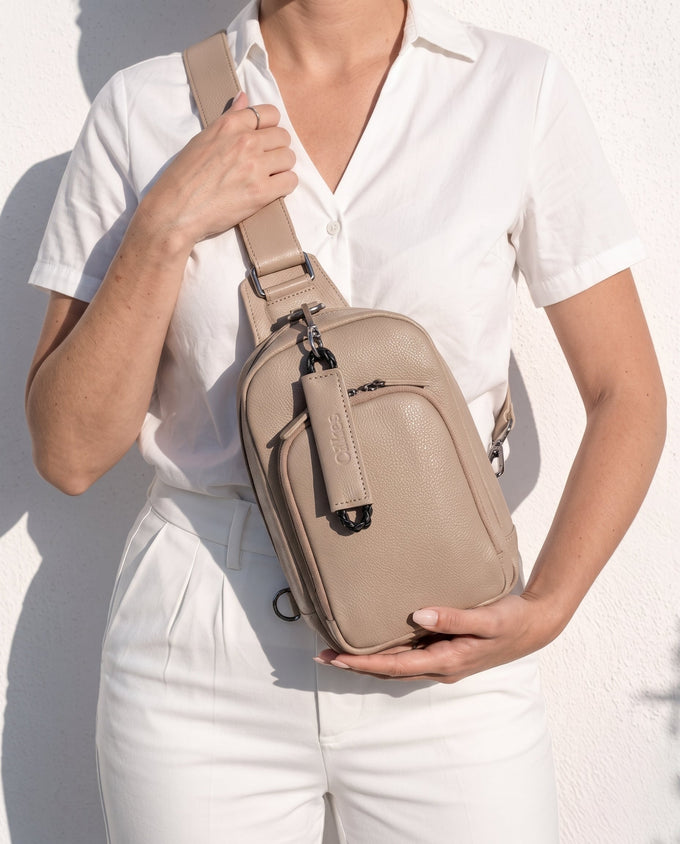
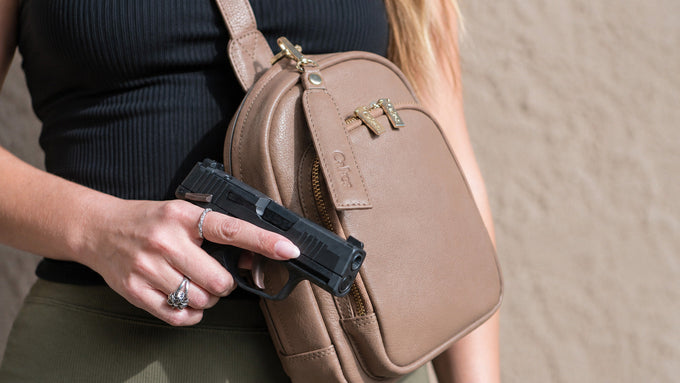
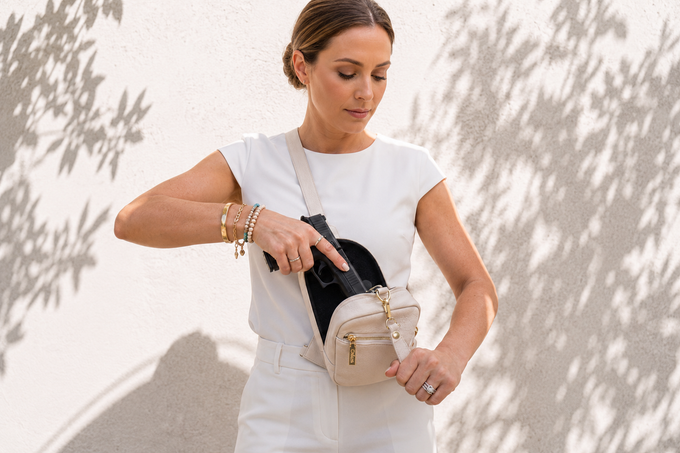
For appendix and waistband carry, the non-negotiables above mean rigid molded material, Kydex or a comparable rigid polymer, built specifically for your make and model rather than a universal fit. For handbag or off-body carry, they mean a dedicated compartment with its own zipper or closure, separated from your regular contents, sized to your specific firearm so it cannot shift or flip inside the bag.
Good gear makes good training easier to run, because you are working with the same setup every time, and that repetition is what builds reliable muscle memory. But gear on its own does not teach you anything. It does not tell you when your finger drifted toward the trigger too early. It does not remind you what is behind your target. It does not know the reciprocity law of the state you are driving through next weekend. That responsibility is yours, completely, regardless of what is on the shelf at any given store.
Cakes Concealed Carry builds gear to support that kind of consistency. Look at the concealed carry holsters and concealed carry bags, and check any holster or bag against the Does It Fit checker on the product page before you buy, using your actual firearm's make and model, not a similar one.
Putting the Ranking Into a Weekly Schedule
Here is how the 4 ranks above translate into an actual week, so this is not abstract:
Weekly, a few minutes of safe handling practice at home: unloading, checking, and re-holstering an unloaded, verified-clear firearm, in a room cleared of live ammunition beforehand.
Monthly, a range session that includes a timed draw from your real concealment setup, plus a tug test on your holster.
Annually, a legal refresher: reread your state's current statutes, check reciprocity for anywhere you plan to travel, and confirm your secure storage setup still fits your household.
Ongoing, gear that passes the Tug test and the Silhouette Test on every outfit you wear it under.
That is the whole structure. Nothing about it requires hours a day or a tactical bootcamp mentality. It requires doing the ranked list, in order, on a schedule you keep.
The Part That Is Yours to Build
Quality gear gets you halfway there. A well-fitted holster keeps your firearm secure and comfortable. It does not teach you how to handle it safely, tell you how often to practice, or explain what your state's law says. That part is yours to build, the same way any real skill gets built: a little at a time, consistently, for as long as you carry.
For a next step beyond this article, find a certified instructor near you through the instructor map, or look into USCCA training resources. Arming you with accurate information is part of what Cakes Concealed Carry considers its product, whether or not it leads to a sale. If you carry, or you are deciding whether to start, put the ranking above in that order: safe handling, then practice, then law, then gear. In that order, it holds up.