
Key Takeaways
Self-care gets defined by whatever is easiest to sell: the candle, the massage, the skincare shelf. The quieter version matters more. It's the set of choices you make because you intend to be well. Personal safety belongs on that list, and the most useful personal safety tips for women come down to self-respect: the settled decision that your wellbeing is worth protecting and that you're the one responsible for it. Real preparedness starts with that mindset. A good firearms instructor teaches the same thing on day one. The most important piece of equipment you own is the one between your ears.
Why Safety Is Self-Care, Not Paranoia
Caution has an image problem. Somewhere along the way, attention to your own safety got tangled up with anxiety, as if a prepared woman must be a frightened one. The opposite is true. You lock your door, wear a seatbelt, and read the lease before you sign it because you're an adult managing her own life. Self-care and safety come from the same instinct: a long-term investment in your own wellbeing.
Seen that way, safety is maintenance, on par with the annual physical and the retirement contribution. You're declining to leave your wellbeing to chance.
Situational Awareness Tips You'll Actually Use
Situational awareness has a reputation as tactical jargon. At its core it's disciplined attention. A few situational awareness tips that translate to real life:
Keep your head up in transitional spaces. Parking garages, stairwells, and transit platforms are where attention matters most, and also where the phone tends to come out. Save the scrolling for when you're settled.
Take your instincts seriously. Many women are socialized to stay polite well past the point of their own comfort. If a situation feels wrong, in an elevator, on a date, in a rideshare, you're allowed to leave without offering anyone an explanation. Intuition is pattern recognition working faster than conscious thought. Treat it as information.
Build a brief scan into your transitions. Before stepping out of the car. Before putting in earbuds. Before unlocking your door with your hands full. A few seconds of attention, applied consistently, does more for you than any gadget on the market.
Small Women's Safety Habits That Add Up
Effective women's safety habits are rarely dramatic. They're small, repeatable, and eventually automatic. Share your ETA with someone when you're out late, and confirm when you're home. Choose the well-lit parking spot even when it's the longer walk. Have your keys in hand before you leave the building instead of digging for them at the door.
Habits like these are infrastructure. They make the solo trip, the night class, and the unfamiliar city available to you, because preparation is what freedom looks like in practice.
Personal Safety Tips for Women On the Move
Your risk picture shifts with your schedule, and your approach should shift with it. An early morning gym session calls for a well-lit route and your attention on your surroundings instead of your playlist. Business travel calls for sharing your itinerary with someone you trust and posting about the trip after you're home, never in real time. Errands with children call for loading the car first, then buckling everyone in, so your attention stays on the lot instead of splitting three ways.
That's the whole method. Move through all of it deliberately, as a woman with a plan, because you are one.
Self Defense for Women: Skills Before Equipment
The market is full of products sold as self defense for women, and most share the same flaw: they imply an object can substitute for competence. It can't. Ask any instructor who trains women for a living. Skills come first, and skills compound.
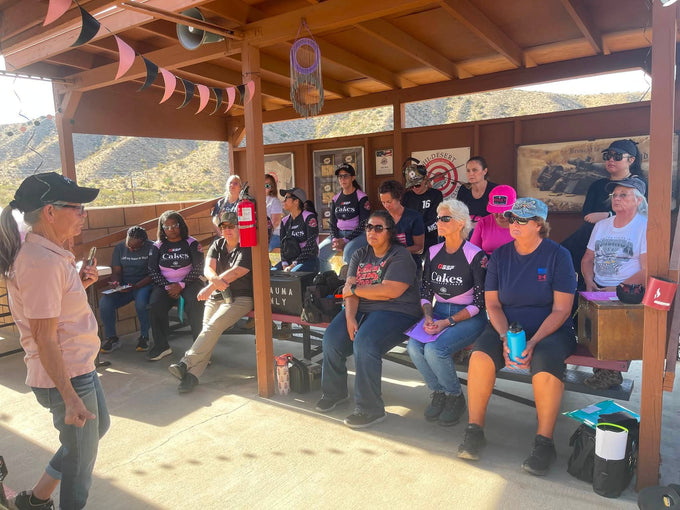
A quality self-defense course teaches more than technique. It teaches how your body responds under stress, how to use your voice, and how to create distance and exit, which is always the objective. Setting a firm verbal boundary is self-defense. So is leaving early. If a course fits your budget, take one. If not yet, reputable organizations publish solid fundamentals at no cost, so start where you are. Then revisit what you learn. Skills fade without practice, and confidence built once and never maintained is only a memory.
Everyday Carry for Women: Build a Kit That Fits Your Life
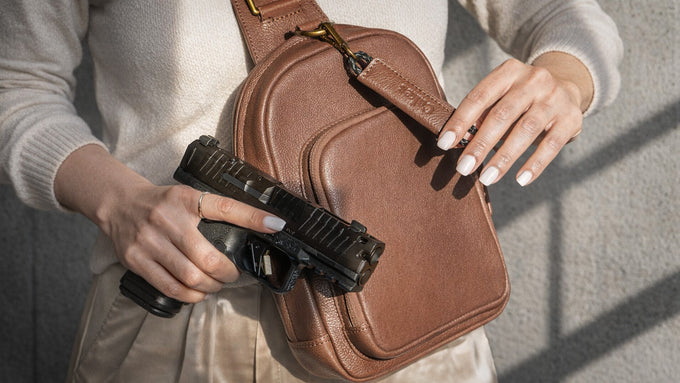
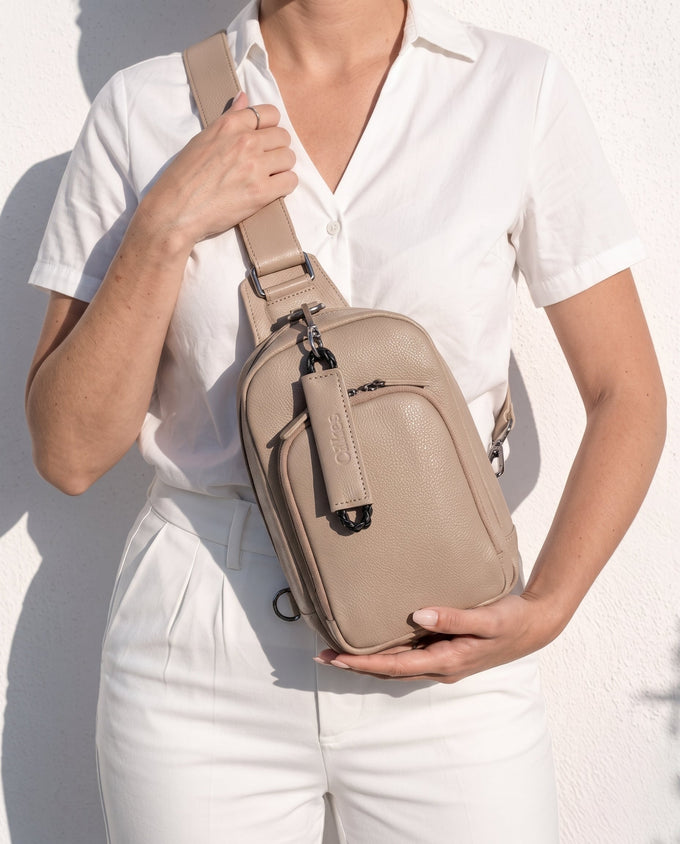
Everyday carry for women doesn't need to look tactical to be serious. A practical kit: a charged phone, a small flashlight, pepper spray where it's legal, and a bag that keeps each item exactly where you expect to find it. The best kit is the one you'll actually have with you, which makes the bag itself a real decision. Purpose-built options run from belt holsters to concealed carry purses, and the right answer is whichever one disappears into your normal life. Cakes bags are the #1 recommendation of female firearms instructors across the USA, an endorsement we value because instructors judge gear on how it performs under stress, not on how it photographs. Discretion is the point. Your preparedness is your business, and no one else needs to see it.
Whatever you carry, know it cold. Know where it sits, how it opens, and what your local laws say about it. An unfamiliar tool is dead weight.
If Carrying a Firearm Is Part of Your Plan
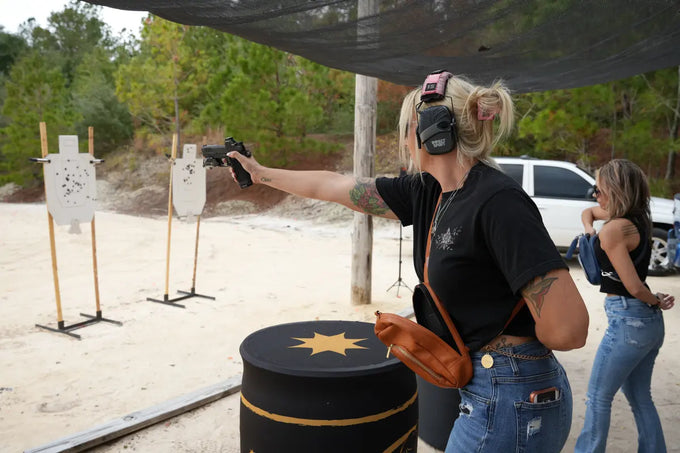
For some women, everyday carry includes a firearm. If that's you, or you're weighing the decision, the standard stays the same: a firearm is one tool among many, never a shortcut, and never a substitute for awareness, training, and judgment. Begin with professional instruction, not videos. The USCCA offers structured classes and resources built for real schedules, and Project ChildSafe is the place to start on secure storage, which is non-negotiable in any home and doubly so in one with children.
Know your state and local laws, train on a regular schedule, and be honest with yourself about your comfort level. Carrying is a serious personal decision and deserves a serious personal process. Off-body carry is its own discipline: train your draw from the exact bag you carry until the motion is unremarkable, and take retention as seriously as access. That standard is why Cakes offers its own systems training certification alongside the bags. Equipment without instruction is half a solution, and we don't sell half solutions. Carrying should also fit your life and your style rather than force a costume change. Plenty of women who carry know that tension between function and design firsthand. It's where the Cakes story started.
There's No One Right Way to Be a Prepared Woman
A useful safety plan fits your life, not someone else's checklist. A young professional in a walkable city, a mother running weekend errands, and a nurse leaving a night shift face different environments, different laws, and different comfort levels. Some women train in martial arts, some carry pepper spray, some carry a firearm, and some invest entirely in awareness and habits. Each is a legitimate answer. The only wrong plan is one you adopted without asking whether it works for you.
Confidence Is the Whole Point
Good personal safety tips for women come down to self-respect. Every habit you build and every course you take is a decision that your wellbeing matters and that you're capable of protecting it.
One more thing, instructor to student: our measure of success has never been the sale. We're here to arm you with information and point you toward quality training, whether or not there's anything in it for us. If we've done our job, you walk away with more than a concealed carry bag. You walk away initiated into a way of life: aware, trained, and quietly confident.
So take the class. Share the ETA. Build the kit that fits your actual life. Then go live it with your head up and your style intact. Safety and being yourself were never a trade-off.