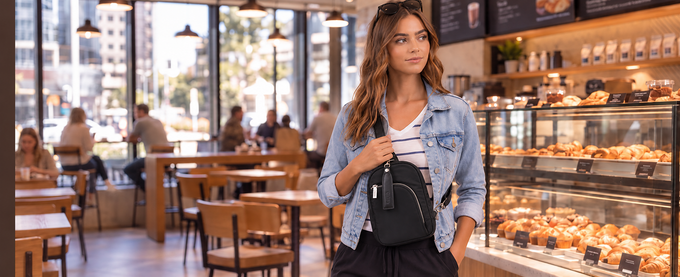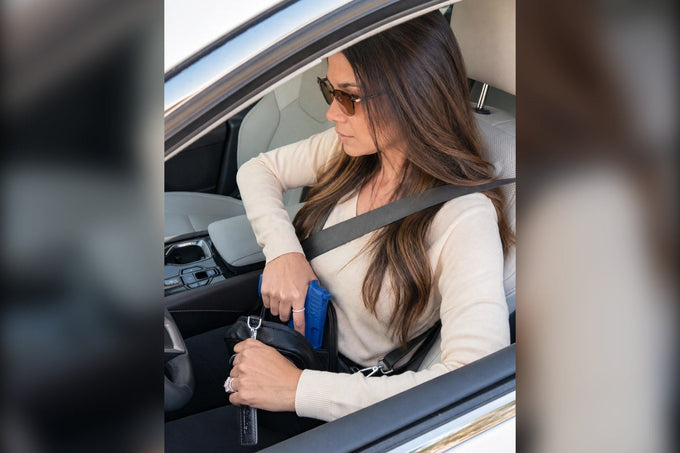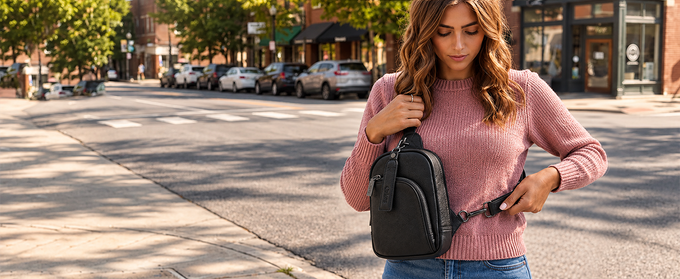

In the concealed carry purse vs holster matchup, an on-body holster is the better default when your clothes and body allow it, because the firearm stays attached to you from morning to night. A purse built for carry wins when a waistband will not work for your wardrobe, comfort or workplace, as long as the bag stays on your body.
We scored the 2 methods over 6 rounds: speed, control, concealment, comfort, storage at home and legal rules. Each round names a winner and explains why, so you can see which rounds matter most in your own life. Wherever a round asks you to try something, do it with an unloaded, verified-clear firearm, ammunition in another room and the muzzle pointed in a safe direction.
Speed to the Grip
A waistband holster usually gets your hand to the grip in fewer steps than a purse, because there is no bag to position and no compartment to open. A well-set-up carry bag closes much of that gap, but it rarely erases it.
Count the steps
Speed starts with the number of separate movements between "I need it" and a firm grip. Fewer movements means fewer chances to fumble. Here is how the 2 methods break down for a typical setup.
|
Step |
Waistband holster |
Carry purse (crossbody) |
|---|---|---|
|
1 |
Sweep or lift the cover garment |
Bring the bag to the front of your body if it has slid to your back or side |
|
2 |
Establish a full firing grip on the holstered pistol |
Open the gun compartment by pulling a tab |
|
3 |
Draw straight up and out of the holster |
Establish a full firing grip on the holstered pistol |
|
4 |
Rotate toward the target, finger off the trigger |
Draw out of the compartment and holster |
|
5 |
Rotate toward the target, finger off the trigger |
General sequence as of October 2026. Your holster, bag and clothing can add or remove a step.
What slows a purse draw
The biggest delay is the bag being in the wrong place. A crossbody strap that has drifted behind your hip adds a full movement before you even reach the compartment. The second delay is the closure. Cakes designs this step around a pull tab: the Madeline Compact-M page describes a "magnetic closure and unique pull-tab" that "you simply pull down for immediate access," and the Millie Athletic XL-M page lists "Magnetic pull tab access."
The third delay is fit. A firearm crammed into a compartment that is too short or too narrow can snag on the way out and fight you on the way back in. That is a speed problem and a safety problem at the same time.
What slows a holster draw
Holsters have delays too. A tucked shirt, a buttoned jacket or a long winter coat turns "sweep the cover garment" into a two-hand job. Sitting in a car can push the grip into the seat or under a seatbelt. A holster that rides too deep makes a full grip hard to get before the pistol starts moving.
Check fit before you judge speed
The Does It Fit? tool on the Cakes site checks your firearm against each bag. It applies 2 rules, quoted exactly: "Firearm + Holster Length must be 0.5 in less than the bag's internal height." and "Frame Height + Optic must be at least 0.5 in shorter than the bag's internal width to allow clean draw and re-holstering."
You choose your make and model, and the tool fills in length and frame height. It then adjusts for your setup: a Kydex holster adds 0.5 in to height, an optic adds 0.5 in to height, an extended magazine adds 1.5 in to height and a weapon-mounted light adds 1 in to length. A bag that passes both rules gives you room to draw without fighting the opening.
Time both methods yourself
Your own numbers beat any general claim. With your unloaded firearm, a phone timer and a safe backstop, time 5 slow draws from each method to a ready position, keeping your finger straight along the frame until the sights are on target. Compare the averages, not your single best draw, and re-holster slowly every time.
Winner: Holster. Fewer steps and no bag position to correct. A purse with a pull-tab compartment that fits your firearm narrows the margin.
Control of the Firearm
A holster wins control outright, because a firearm on your belt cannot be set down, forgotten or grabbed along with a bag. A purse can be just as controlled, but only when you treat the strap as part of your body.
Where bags drift away from you
The risk with a bag is ordinary life. Purses get hung on chair backs, set in shopping carts, left on car seats, dropped under restaurant tables and hooked on bathroom stall doors. Each of those moments puts the firearm out of your reach and possibly within someone else's. A holster removes every one of them, because there is nothing to put down.
The snatch problem
A thief who takes your purse takes your gun. A crossbody strap makes that harder, because someone would have to get the strap over your head or cut it rather than pull it off a shoulder. Cakes builds its bags this way; the homepage says the purses "feature a comfortable crossbody configuration."
How a carry bag closes the gap
A bag made for carry adds control features a regular handbag lacks. The Millie Athletic Compact-M lists a "Dedicated firearm compartment," so keys, pens and lip balm never share space with the trigger. The Madeline XL-M describes "N45-strength neodymium magnetic force that ensures your main CCW compartment stays closed throughout the day" and "Space for a holster along the inside back of the bag."
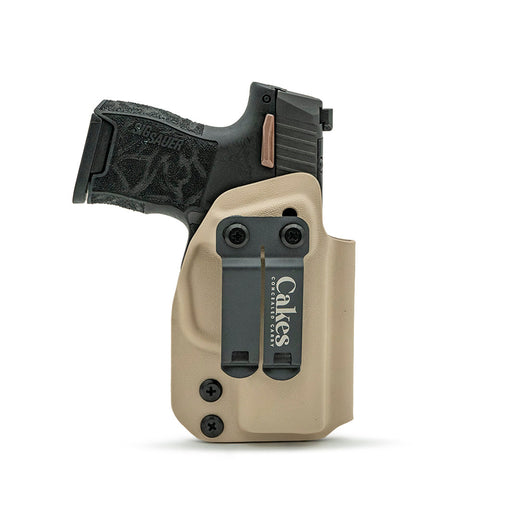
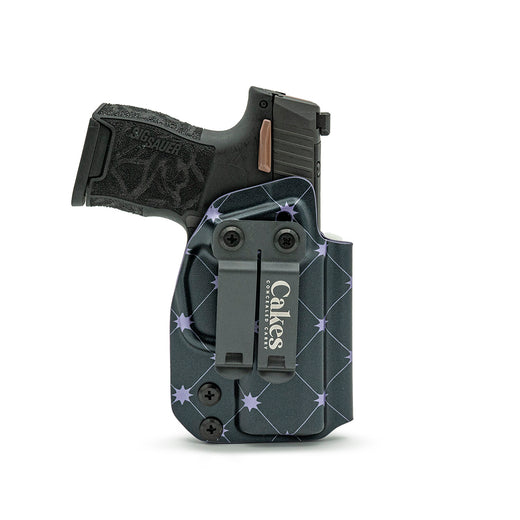
Inside the compartment, the firearm should sit in a holster that fully covers the trigger guard. The Cakes holster collection includes IWB holsters made for on-body wear and for use inside a Cakes bag, and they attach with a hook and loop back panel, which keeps the holster from shifting when the bag moves. Here are the IWB holsters you can wear on your body or carry in your bag:


Control on the holster side
A holster still has to earn its score. It should be molded for your exact model, cover the trigger guard completely and hold the pistol firmly enough that it stays put when you bend, sit or climb stairs. A soft or generic holster on a flimsy belt can tip outward and loosen your control.
Is purse carry safe?
If you are asking is the purse carry safe? The answer depends on the bag and on your habits. It is reasonable when the bag has a dedicated firearm compartment, the pistol rides in a holster that covers the trigger guard, the strap crosses your body and the bag is either on you or in locked storage. Drop any one of those 4 conditions and the answer changes.
Winner: Holster. It cannot be separated from you by accident. Purse carry reaches a close second only with a crossbody strap and a firm on-body-or-locked-up habit.
Concealment in Real Clothes
A purse wins concealment for most women, because the bag hides the firearm's outline no matter what you wear. A holster can disappear under the right clothes, but fitted outfits make that much harder.
What printing means
Printing is when the shape of a firearm shows through your clothing, usually as a hard edge at the grip when you bend, reach or sit. It is the main concealment problem for waistband carry. A bag cannot print the same way, because people expect a handbag to have shape.
Outfit by outfit
|
Outfit |
Holster concealment |
Purse concealment |
|---|---|---|
|
Jeans or trousers with a belt and a loose top |
Good: the belt anchors the holster and the top covers the grip |
Good |
|
Fitted top tucked into trousers |
Hard: little room to cover the grip |
Good |
|
Dress or jumpsuit with no belt |
Very hard: no waistband to anchor a holster |
Good |
|
Leggings and a fitted athletic top |
Hard: soft waistband and close fit |
Good, especially with a nylon bag |
|
Blazer or open cardigan over a blouse |
Good while the layer stays on |
Good |
|
Evening wear |
Very hard for most outfits |
Good, if the bag suits the setting |
General concealment guidance as of October 2026. Body shape, holster position and fabric weight change the result.
A carry bag has to look like a bag
Concealment also means the bag itself draws no attention. A boxy tactical pouch at a dinner reads differently from a leather crossbody. The Cakes Madeline line is leather and the Millie Athletic line is nylon, and each comes in a Compact-M and an XL-M size. The table lists what each product page states, and the CCW bags collection shows every current style.
|
Bag |
Material |
Dimensions (as listed) |
Strap |
|---|---|---|---|
|
100% naturally milled cow hide leather |
6.6 in W x 9 in H x 2.16 in D |
Adjustable up to 49 in, max circumference 55 in |
|
|
100% naturally milled cow hide leather |
5.6 in W x 8 in H x 2.16 in D |
Max circumference 55 in |
|
|
Nylon |
6.7 in x 9 in x 2 in |
Adjustable to 49 in, max circumference 55 in |
|
|
Nylon |
5.7 in x 7.8 in x 2 in |
Adjustable to 49 in, circumference 55 in |
Details as of October 2026, copied from the product pages. Product pages list outside dimensions; use the Does It Fit? tool for fit.
Shop the Cakes concealed carry bags:


Leather reads as a dressier handbag for the office or an evening out. Nylon fits the gym, trails and travel days. Either way, the bag hides the firearm's outline completely, which is the point of this round.
Winner: Purse. It conceals under any outfit, including the dresses, leggings and fitted clothes that defeat most waistband setups.
Comfort Over a Long Day
A purse wins comfort for most long days, because nothing presses into your hip or stomach while you sit, drive or bend. Holster comfort varies widely with body shape, holster position, and belt, so some women find waistband carry comfortable all day.
Where the weight goes
A holster puts the firearm's weight and hard edges against your waist. A curvy waist, a short torso or a high-rise waistband can make some positions dig in after a few hours. A crossbody bag spreads the weight across your shoulder and chest instead. The tradeoff is that 1 shoulder carries the load all day.
Strap adjustment decides whether a bag rides where you want it. The Madeline XL-M strap is listed as "Adjustable up to 49 inches, with a maximum circumference of 55 inches," and both Millie Athletic bags list a strap adjustable to 49 in. Set the bag at a height where your hand meets the compartment without reaching.
Sitting and driving
Long seated hours are where waistband carry most often hurts. The grip can press into your side, and a car seat can push the holster into your back or hip. A crossbody bag lets you sit normally. In a car, keep the strap on and the bag in your lap or at your side rather than on the passenger seat, so it stays under your control.
Swing and bounce
A bag's comfort problem is movement. Walking fast, climbing stairs or chasing a child can swing the bag away from where you expect it. The Waist Belt for CCW Bags clips onto either D-ring on the sides of a Cakes bag and goes around your waist, which holds the bag closer to your body.
Give the holster a fair trial
Before you score waistband carry as uncomfortable, try more than one position and ride height. A small change in cant or placement can change how a holster feels after 6 hours. A qualified instructor can help you test positions with your unloaded firearm, and the Cakes instructor directory lets you enter a zip code to find firearms instructors within 200 miles; the page says Cakes Certified instructors are vetted and certified by the Cakes team and appear first.
Winner: Purse. Less pressure on your body while seated or bending. A holster that suits your build can tie this round, so test before you decide.
Storage When You Get Home
Both methods end the same way: when the firearm leaves your body, it goes into a locked safe or lockbox. A holster edges out the purse here, because taking it off forces you to deal with the firearm, while a bag is easy to drop on a counter still loaded.
The arrival moment
Holster carriers reach a natural checkpoint when they change clothes; the belt comes off and the pistol has to go somewhere. A purse has no such checkpoint. It is easy to walk in, hang the bag on a doorknob and forget that a loaded firearm is inside. Build the transfer to locked storage into the same moment you put down your keys, every day, for both methods.
Children and visitors
Children reach into bags looking for snacks, phones and gum, and guests set their own bags next to yours. A purse left on a couch is within reach of anyone who picks it up. Keep the firearm on your body or locked up, with no third option, whenever children or visitors are in the home.
Project ChildSafe (a National Shooting Sports Foundation program) hands out free gun locks and safety kits along with storage guidance for families. A cable lock is a backup, not a replacement for a lockbox or safe that keeps the firearm out of reach.
Vehicles
A bag on a car seat is visible and easy to steal through a broken window. If you must leave a firearm in a vehicle, use a locked container and check your state's rules on vehicle storage first, because they vary.
Winner: Holster, narrowly. Its built-in checkpoint makes the move to locked storage harder to skip. A purse ties if your arrival routine is automatic.
Legal and Venue Rules
Neither method is automatically more legal than the other; the rules that matter come from your state and the places you go. This round is a tie, and the information here is general, not legal advice.
What the rules tend to cover
Some state laws describe carry as a firearm "on or about your person," and how that phrase applies to a bag can depend on the state. States also differ on how a firearm must be stored in a vehicle and where carry is prohibited. Schools, government buildings, airports and private businesses can set their own rules on top of state law.
Venue rules shape your method
When a venue bars firearms, both methods face the same problem, and a bag is the easier one to forget about. If your day includes a stop where you cannot carry, plan where the firearm will be locked before you leave home.
Accuracy note: carry laws change often. Check your current state law and any local rules before you carry in a bag or a holster, and ask a certified instructor about your state's specifics.
Winner: Tie. The law in your state decides this round, not the carry method.
Final Score: Concealed Carry Purse vs Holster
Across 6 rounds, the holster wins 3, the purse wins 2 and 1 is a tie. That makes a holster the stronger default, while the purse takes the rounds most women feel every day: what they can wear and how they feel by evening.
|
Round |
Purse |
Holster |
Winner |
|---|---|---|---|
|
1. Speed to the grip |
Extra steps: position bag, open compartment |
Fewest steps to the grip |
Holster |
|
2. Control of the firearm |
Depends on strap and habits |
Always attached |
Holster |
|
3. Concealment in real clothes |
Hides the outline in any outfit |
Hard in fitted or beltless outfits |
Purse |
|
4. Comfort over a long day |
No waist pressure; weight on 1 shoulder |
Varies with body and position |
Purse |
|
5. Storage at home |
Easy to set down still loaded |
Built-in checkpoint when it comes off |
Holster, narrowly |
|
6. Legal and venue rules |
Set by state and venue |
Set by state and venue |
Tie |
Scorecard as of October 2026. Scores reflect general trade-offs between methods, not a test of any single product.
Weight the rounds for your life
A raw score treats every round as equal, and your life probably does not. If you wear dresses 5 days a week, Round 3 may outweigh everything else. If your days involve setting bags down in carts and on chairs, Round 2 should carry the most weight. In the off body carry vs on body carry decision, the method that wins your heaviest round is usually the right one.
The same logic settles IWB vs purse carry for most readers. IWB means inside the waistband: the holster sits inside your pants or skirt, clipped to the waistband or belt. Choose it when your clothes can hide it and your body tolerates it. Choose a purse when they cannot, then work hardest on Rounds 2 and 5.
Using both methods
You do not have to crown one winner forever. Many carriers rotate between a waistband holster and a bag by outfit. The Cakes holster collection says, "You can wear them on your body or use them with one of our concealed carry bags," and its IWB holsters are named "Convertible Bag Use" for that reason. Check the collection for each style's model fit.
Rotating means 2 different draws. Give each its own dry reps with your unloaded firearm, and do not switch to a method you have not rehearsed recently. Want the longer case for regular reps? Read Training the Draw: Why Practice Matters as Much as the Gear.
Why we call it this way
Cakes sells both bags and holsters, so the score does not favor either shelf. We count this article as a success if you leave knowing which method fits your life and how to carry it safely, because informing you is part of what we make; a sale is not the scoreboard that matters.
FAQ: Concealed Carry Purse vs Holster
Is a holster better than a purse for concealed carry?
For constant control, yes: a waistband holster cannot be set down or snatched the way a bag can. In the concealed carry purse vs holster choice, a purse is better when clothing or comfort rules out a waistband, provided the bag has a dedicated compartment, a holster inside and stays on your body.
Is purse carry safe?
It can be. Use a bag with a dedicated firearm compartment, a holster that fully covers the trigger guard and a strap worn across your body. Keep the bag on you or in locked storage at all times, and never share the gun pocket with keys, pens or makeup.
Can I use the same holster on my body and in a bag?
Some holsters are made for both. The Cakes holster collection lists Kydex holsters for on-body IWB wear or bag use, so check each style's description and model fit. Whatever you choose, give each carry method its own draw reps with your unloaded firearm before you rely on it.
Is off-body carry legal in every state?
Each state writes its own rules, and some states and venues restrict where and how you may carry or store a firearm, including in a vehicle. Check current state law and local rules, then ask a certified instructor how they apply to you. This answer is general information, not legal advice.
Next Step: Score Your Own Setup
Run your make, model and setup through the Does It Fit? tool to see which bag sizes pass both fit rules. Then compare bags in the CCW bags collection and holsters in the holster collection, and book a session through the instructor directory so you can time both draws under supervision.